
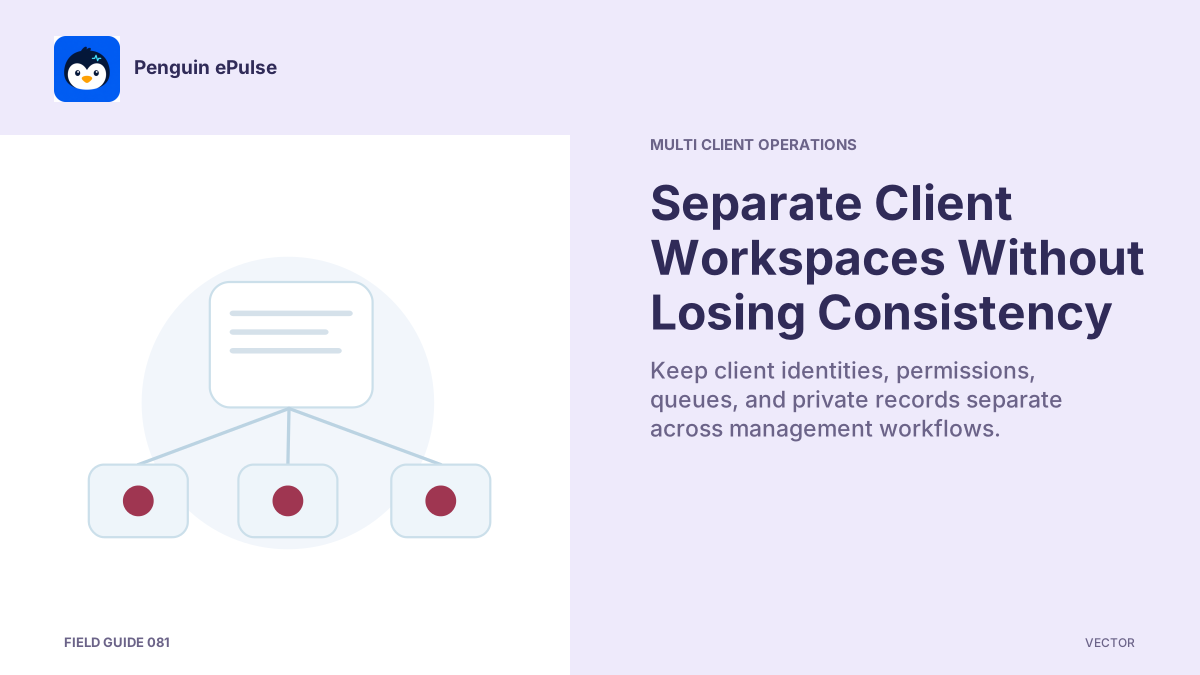
Multi client social media management coordinates separate client accounts, permissions, work queues and reporting obligations without mixing identities or private records.
Social media management platforms should preserve client identity and access boundaries through publishing, inbox work and exports.
Make the client boundary an operating rule
Multi-client social media management organizes work for several clients while keeping their accounts, content, conversations and decisions correctly separated. The boundary needs to hold throughout the workflow: drafting, review, publication, inbox handling, analysis, export and offboarding. A workspace name in a navigation menu is a useful orientation cue, but it does not by itself prove that every action or shared link respects the client's scope.
Start with the assets and decisions the agency manages. Record social accounts, campaign files, inbox sources, reporting properties, approvers and authorized contacts for each client. Specify which service lines are included. An agency authorized to publish approved content may not be authorized to answer a billing dispute or export customer messages. The operating model should make those distinctions clear before a teammate encounters an unfamiliar request under pressure.
Keep the client as the durable unit of separation even when one team serves several related brands. A parent company, region or campaign may need additional structure inside the client space. Define that relationship explicitly and confirm who can access each part. Similar business names and shared managers are reasons to inspect scope carefully, not reasons to merge records informally.
Map people to specific tasks
Create a permission matrix with people or roles on one axis and actions on the other. Include draft, review, approve, publish, reply, moderate, connect accounts, export data and administer access. Add the client scope and any temporary assignment. A designer may need approved assets without needing private conversations. A reporting analyst may need aggregate analytics without needing publication controls. Roles should reflect the work required, rather than seniority alone.
The OWASP Authorization Cheat Sheet [1] recommends least privilege and consistent authorization checks. For an agency choosing software, the practical task is to verify how the candidate enforces the required boundaries. Inspect the roles actually available, rather than assuming a label such as editor has the same powers in every application. Document accepted limitations and the compensating workflow if the available permissions are broader than the ideal task map.
Native platform access also needs its own review. The YouTube Help: channel permissions [2] describes distinct channel permission levels without requiring shared account credentials. That is a platform-specific example, not a universal model for every network. For each actual account, confirm the relevant role, who owns the relationship and what happens when the agency contact changes. Keep sensitive credentials out of onboarding spreadsheets and routine handoff notes.
Separate content and approval evidence
Give every content record a client, account, owner, asset version and current review state. An agency may reuse a production checklist across clients, but the approved copy, brand rules and publication decision belong to the specific client. Template reuse should carry structure, not accidentally carry another client's wording, offer, testimonials or confidential notes. Inspect a newly copied template before placing it in a client review queue.
Approval should identify the exact content and intended destination. A client who approves the text for one market has not necessarily approved its use on another account or in a paid promotion. Record relevant conditions and who has authority to decide them. When a material change occurs, establish whether another review is needed. A saved approval timestamp cannot resolve ambiguity about which version the client saw.
Publication needs a final context check. The person releasing content should confirm the client, account identity, version, schedule timezone and approval record. Use a review method that reveals the actual destination instead of relying on the order of accounts in a dropdown. If the tool cannot make a boundary clear, record the operational risk and choose a process the team can reliably maintain at the expected workload.
Keep reporting and conversations within scope
Client reports should originate from the correct accounts, date windows and source definitions. A shared report template can standardize useful fields while preserving client-specific goals and limitations. Check data connections when duplicating a report. Changing the logo and title does not prove that the charts or embedded links now refer to the intended client. A fresh report with no available data should show an honest empty state rather than borrow a populated example silently.
Inbox work requires a separate routing map. Record who handles general questions, service cases, sensitive issues and incidents. Context may include private information that should not appear in a wide agency overview. Share what the receiving team needs and keep the underlying case within approved access. The NIST Privacy Framework [3] provides a voluntary privacy-risk reference; this operating guide does not certify compliance or replace the client's approved handling requirements.
Exports create a second boundary outside the original tool. Confirm recipient, fields, date range, source scope and sharing method before generating the file. A client summary rarely needs every identifiable conversation. Separate broad aggregate reports from restricted case evidence. Treat preview links, downloaded files and scheduled deliveries as part of the access map so offboarding addresses more than the agency dashboard login.
Worked example: two clients share a production team
Consider a hypothetical agency managing a restaurant group called Harbor and a software company called Summit. All names and workflow outcomes here are invented. One writer drafts for both clients, two account managers own their respective approvals, and a publisher releases approved posts. The writer needs both content spaces but does not need Summit's restricted support inbox or Harbor's private reservation complaints.
The agency first builds a task matrix and separate client inventories. It then creates a shared production checklist with no client claims or account connections. Harbor's manager adds its current offer conditions; Summit's manager adds its verified implementation message. Each manager routes the relevant version to the correct client approver. The publisher's queue displays the destination account and client alongside the approved asset reference.
A reporting analyst copies the agency's monthly template into Summit's reporting space. The template initially contains an old example connection in one chart. The agency's controlled pre-delivery check detects the mismatch before sharing. The analyst replaces the connection, validates the report scope and records the correction. The example demonstrates why template inspection matters; it is not a claim about the behavior of a named software product.
During a planned handoff, Harbor changes its approver. The account manager confirms the new person's authority, updates the routing record and checks that old external review links follow the approved access process. Pending drafts remain pending until their review status is confirmed. The agency can continue production because ownership, authority and version evidence are explicit, rather than relying on a departing teammate's memory.
Verify the boundary through realistic tasks
- Open a new client space and inspect its content, data connections and empty states.
- Confirm each role can perform its required tasks within the intended client scope.
- Verify that an unrelated client record and export remain inaccessible under controlled test conditions.
- Copy a permitted template and inspect every connection, link and inherited field.
- Review a draft as the designated client approver and inspect the version history.
- Check publication destination, inbox routing and report delivery as separate tasks.
- Remove a test assignment and verify the related shared links and access paths.
Use approved test workspaces or harmless records when evaluating boundaries. Do not disrupt live client accounts merely to demonstrate a recovery condition. Documentation and a controlled demonstration can establish some behaviors; record where actual tenant testing remains necessary. A sales demo or a permission label is evidence of what was shown, not proof of isolation across all paths. Important unresolved requirements should remain unresolved in the selection record.
Include narrow-screen and occasional-user review when people approve work from phones or use the system infrequently. The client identity and approval version need to remain clear under those conditions. Ask the reviewer to identify the destination and pending decision before acting. A flow that works only when an experienced agency administrator guides each click may create recurring review effort the team must account for.
Maintain the model as clients and teams change
Assign an administrator and a review cadence for account inventories, permissions, approvers and export routes. Trigger a focused review when a teammate leaves, a client adds a brand, an account disconnects or the service scope changes. Keep an exception register with owner, expiry date and required follow-up. A temporary broad permission should not become permanent simply because no one revisited its original reason.
Capacity planning belongs beside the boundary model. Every new client adds administration, review and exception handling as well as content production. Estimate those recurring tasks before promising a service level. Monitor unresolved approvals, routing failures and data gaps separately from completed work. A shared operating overview can help agency leadership manage capacity while keeping detailed client data in the authorized space.
Offboarding should preserve the client's ability to continue its work. Prepare an inventory of approved assets, pending decisions, open cases, reporting definitions and relevant source records. Agree on delivery and retention according to the relationship and applicable requirements. Verify receipt through the authorized process before revoking access in the planned order. A workspace removal alone does not establish that the client received a usable handoff or that every external access route was reviewed.
Frequently asked questions
Can one teammate work across several client spaces?
Yes, when the assignment is authorized and permissions reflect the tasks needed in each space. Cross-client work is common; accidental cross-client access or data reuse is the problem the operating model must prevent. Review inherited links, exports and native platform permissions as well as workspace membership.
What can be shared as an agency template?
Share the structure, calculation method and review checklist when permitted. Inspect copied content for claims, personal details, source connections and client-specific decisions. Approval does not transfer from the original client to a new client simply because the template was copied.
What proves that separation works?
A combination of documented requirements, suitable software controls and realistic authorized checks provides evidence for the tested paths. Keep limits visible. Passing a few demonstrations does not establish every possible integration or link behavior, so release-critical paths and changed configurations need their own verification.
References and source scope
- OWASP Authorization Cheat Sheet
OWASP least privilege, default denial and consistent permission checks; actual social-product access must be inspected.
Source link checked 2026-10-03 - YouTube Help: channel permissions
YouTube delegated channel roles and documented limits, including API access; native permission behavior is source-specific.
Source link checked 2026-10-03 - NIST Privacy Framework
NIST voluntary privacy-risk framework; informs handling considerations, not a compliance certification or disclosure authorization.
Source link checked 2026-10-03