
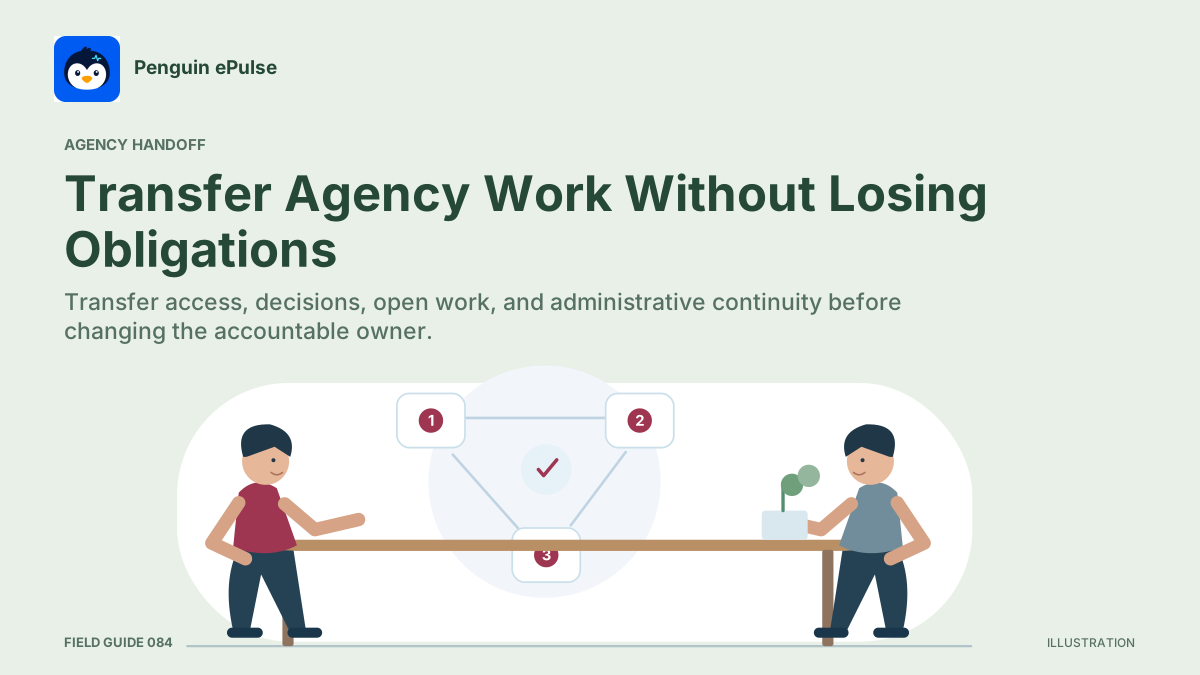
An agency social media handoff transfers the work, access, decisions and outstanding obligations needed by the next owner to maintain continuity.
A handoff involving social media management platforms should verify administrative continuity and retained obligations before an outgoing owner loses access.
Define what the next owner must continue
An agency social handoff transfers the context and responsibility needed to continue publishing, conversation handling and reporting. It may follow a staff change, a new agency assignment or the end of a client engagement. Start with the work that is still active. A folder full of finished posts is helpful, but it does not explain which draft needs a decision tomorrow or which unresolved conversation needs a specialist response.
Name the outgoing owner, receiving owner, client decision maker and transfer date. Specify the service scope being handed over. A partial transfer of reporting should not be treated as a transfer of publication authority. Identify any overlap period and the rule for who acts during it. Without that rule, both teams may respond to the same case or each may assume the other owns it.
Build a usable handoff inventory
Organize the record around accounts, content, conversations, reporting and administration. For accounts, include stable identity, client ownership, access method and connection status. For content, include approved assets, pending versions, scheduled destinations and approval conditions. For conversations, include open case identifiers, current status, promised next steps and receiving owners within the approved access process.
Reporting needs its own documentation: source connections, metric definitions, windows, timezone, missing-data treatment and delivery recipients. Include the latest report and enough source context to reproduce a material calculation. A template without its definitions can carry an error into the next team. Mark historical reports that used a different method so the receiver does not stitch incompatible results into a continuous series.
Access should be transferred through supported administrative processes. The YouTube Help: channel permissions [1] offers a platform-specific example of channel permissions. Confirm the actual native account and tool conditions rather than sharing passwords in the handoff pack. The inventory should identify who can grant or recover access while keeping sensitive authentication material in the organization's approved system.
Separate obligations from reference material
Create a prominent action register for unfinished work. Each item needs a client, owner, next action, due date, status and source reference. Use specific states such as waiting for factual verification or awaiting client approval. "In progress" may conceal whether the new owner can act immediately or needs a decision from someone else. Keep commitments made to customers visible within the appropriate restricted record.
Then provide reference material: brand guidance, current approved policies, asset permissions, recurring workflows and known exceptions. Distinguish current sources from historical examples. An old response may show tone while containing outdated policy. The receiving team should be able to identify the authority for a current promise without searching years of conversations for something that looks similar.
Record manual workarounds and why they exist. A spreadsheet step, permission limitation or timing dependency may be necessary to produce a correct deliverable. If the workaround has no owner after the transfer, a recurring report can fail even though every main account connection appears healthy. Explain frequency, consequence of failure and the route for resolving the limitation.
Worked example: a mid-quarter owner change
This hypothetical example concerns an invented agency account manager leaving during a reporting quarter. The handoff includes 6 scheduled posts, 4 drafts awaiting decisions and 3 open service cases. These counts are illustrative. One draft has approved text but a replacement image still needs client review. The action register therefore records conditional status rather than marking the entire post approved.
The outgoing manager also identifies a monthly report that requires a manual paid-media export from the client. The receiving manager practices the report task with the agreed source and notices that the timezone differs from the social template. They resolve the method with the client reporting owner and document the final specification. The exercise discovers a real type of handoff risk without claiming a result for an actual customer.
For the open cases, the receiver reads the permitted context and acknowledges ownership through the internal process. A promised follow-up date remains visible. During the overlap period, the outgoing manager stops taking new actions on those assigned cases unless the receiver requests help. The teams verify the assignment and relevant account access before the planned removal of obsolete permissions.
Verify transfer through a checklist
- Confirm the receiving owner and the exact scope of responsibility.
- Reconcile connected accounts with the client's account inventory.
- Inspect scheduled posts and unresolved approvals against the correct versions.
- Transfer open-case context and commitments through authorized channels.
- Reproduce a representative reporting task with its definitions and source inputs.
- Review shared files, external links and permissions as separate access paths.
- Record receipt, remaining gaps and the agreed sequence for access removal.
Have the receiving owner perform a small representative task. Finding a source, identifying the pending decision or producing a sample report reveals more than asking whether a large folder was received. Use harmless records and avoid duplicating live replies or publications. Record what passed and what remains blocked so the transfer status describes operational readiness, not simply delivery of a file.
Preserve continuity and control the exit
Plan access changes in an order that maintains the client's ability to operate. Confirm administrative ownership and recovery paths before revoking the outgoing assignment. The Google Drive: file sharing permissions [2] documents file sharing controls; inspect document links and folders separately from social tool membership. A handoff pack can remain accessible through a file permission even after a dashboard role is removed.
Apply the agreed handling and retention rules to historical conversations, exports and local copies. The NIST Privacy Framework [3] provides a voluntary reference for privacy-risk management. This guide recommends an organized transfer, not unrestricted copying of every customer record. Where the receiver needs only an aggregate report or neutral case summary, prepare that limited material and keep raw evidence restricted.
State limitations in the final receipt. A transferred folder does not prove native access, source completeness or correct account ownership. An acknowledgment from the receiver does not resolve an unavailable metric or pending client decision. Use separate states for delivered, received, task-verified and unresolved so a later team member understands exactly what was established at the handoff.
Frequently asked questions
What is the most important handoff document?
The current action register is often the most urgent because it shows unfinished obligations. It should sit beside the account inventory and method notes, with source references and owners. Historical material is useful when it supports those live responsibilities.
Should the old owner lose access immediately?
Follow the approved transition plan and the circumstances of the departure. For a planned transfer, verify continuity and administrative ownership before the scheduled removal. Urgent security circumstances may require a different process led by the authorized administrator.
How do we know the handoff is usable?
Ask the receiver to complete representative tasks and identify unresolved work from the provided record. Verify the relevant access paths and record the evidence. File receipt alone proves delivery of material, while operational readiness needs checks tied to the work being transferred.
References and source scope
- YouTube Help: channel permissions
YouTube delegated channel roles and documented limits, including API access; native permission behavior is source-specific.
Source link checked 2026-10-03 - Google Drive: file sharing permissions
Google Drive sharing roles and general-access controls; inspect file sharing separately from dashboard membership.
Source link checked 2026-10-03 - NIST Privacy Framework
NIST voluntary privacy-risk framework; informs handling considerations, not a compliance certification or disclosure authorization.
Source link checked 2026-10-03