
Topic collection
Social Media Analytics guides
Social media analytics turns platform measurements into decisions when metric definitions, time windows and denominators are consistent. These guides cover performance evaluation, attribution limits, cross-platform comparisons and the checks that prevent a missing value from becoming a misleading zero.
Begin with the analytics framework and KPI definitions. Move to engagement-rate calculations, content-format comparisons and data-quality checks when you need to explain a change in performance or decide what to test next.

Social Media Analytics: Build a Measurement System Around Decisions
Build a social media analytics system with clear metric definitions, data checks, fair comparisons, decision owners, and defensible outcome claims.

Engagement Rate: Choose the Right Formula and Denominator
Choose an engagement-rate formula with a named numerator, matched denominator, clear paid treatment, and fair aggregation across posts.

Reach vs. Impressions: What the Difference Changes in Your Report
Interpret reach and impressions with source definitions, deduplication boundaries, compatible windows, and a distinction between delivery and attention.

Create a Social Media Metric Dictionary Your Team Can Trust
Create a metric dictionary with source fields, formulas, time scope, missing-value rules, aggregation limits, versions, and accountable change ownership.

Paid vs. Organic Social Analytics: Keep the Comparison Fair
Compare paid and organic results with separate distribution cohorts, aligned objectives, promotion history, comparable windows, and explicit attribution rules.
Missing Social Media Data: Diagnose the Gap Before Reporting Zero
Diagnose missing social data by separating zero, unavailable, delayed, unauthorized, deleted, and incomplete collection states before reporting.

Social Media Data Quality: Find Drift Before It Reaches the Dashboard
Check social data quality with source lineage, object reconciliation, freshness, duplicate controls, definition drift, and decision-specific acceptance rules.
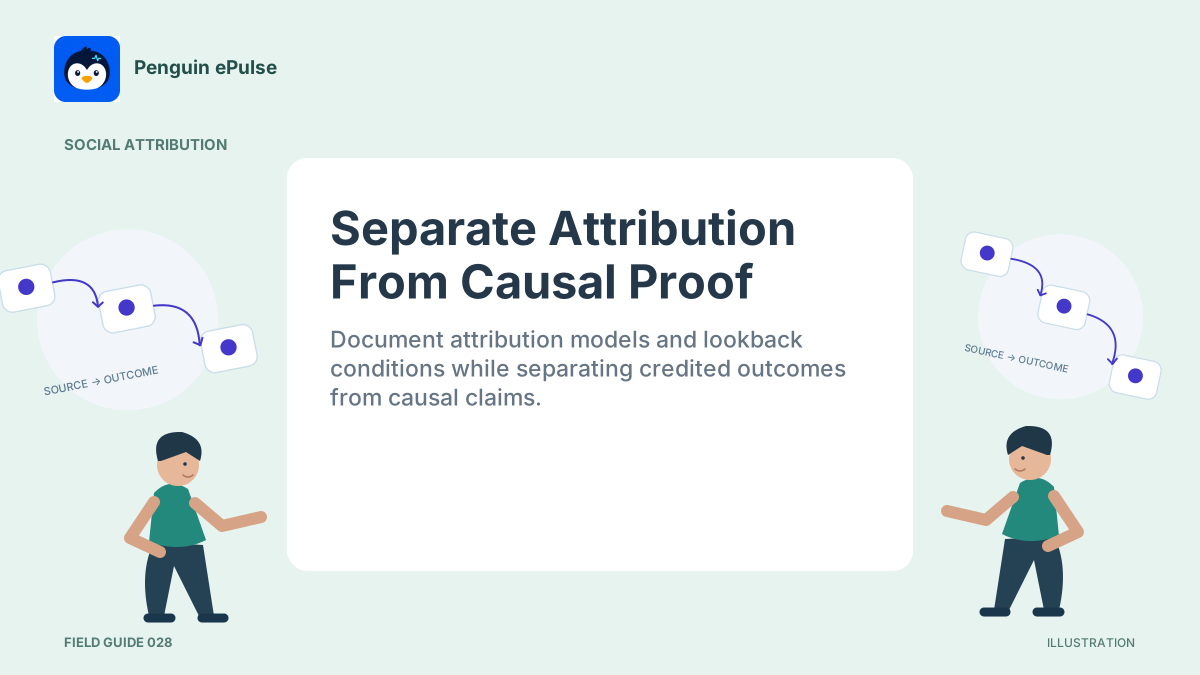
Social Media Attribution: Separate Observed Paths From Causal Claims
Interpret social attribution with defined events, models, windows, identity limits, reconciled outcomes, and a separate method for causal impact.

UTM Tracking for Social Media: A Naming and QA Guide
Build a social UTM naming system with stable source, medium, campaign and creative values, safe tags, redirect checks, and report QA.

Social Media ROI: Build a Calculation You Can Defend
Calculate social media ROI with verified outcomes, a consistent cost basis, contribution margin, attribution limits, and sensitivity to uncertain assumptions.