
Topic collection
Brand & Social Listening guides
Social listening begins with a research question and a defined conversation set. These guides explain how to design queries, review sentiment, investigate emerging topics and interpret competitive conversation without treating public posts as a complete audience census.
Start with the social listening framework, then refine keyword queries and inclusion rules. Use the monitoring comparison to separate day-to-day alerts from research, and the coverage guides to record what the dataset cannot answer.
What Is Social Listening? Definition, Method, and Limits
Learn what social listening is, define the research question, validate source coverage, review themes, and connect the evidence to a practical decision.
Brand Listening and Brand Monitoring: Turn Evidence Into Decisions
Compare brand listening and brand monitoring, assign decision owners, document source limits, and turn conversation evidence into useful actions.
Build Social Listening Queries That Find the Right Conversation
Build and test social listening Boolean queries with entity rules, context groups, careful exclusions, relevance review, and a versioned query log.
How to Evaluate Social Listening Data Coverage
Evaluate social listening coverage by source, data object, permissions, history, refresh timing, and the exact evidence your research question requires.
Reduce Social Listening Noise Without Losing Useful Evidence
Reduce listening noise with labeled relevance samples, careful exclusions, duplicate handling, source diagnostics, and tests for valuable material you might lose.
How to Check Sentiment Analysis Accuracy Before Reporting It
Validate social sentiment labels with a reviewed sample, class-level errors, mixed-language checks, and an explicit reporting threshold.
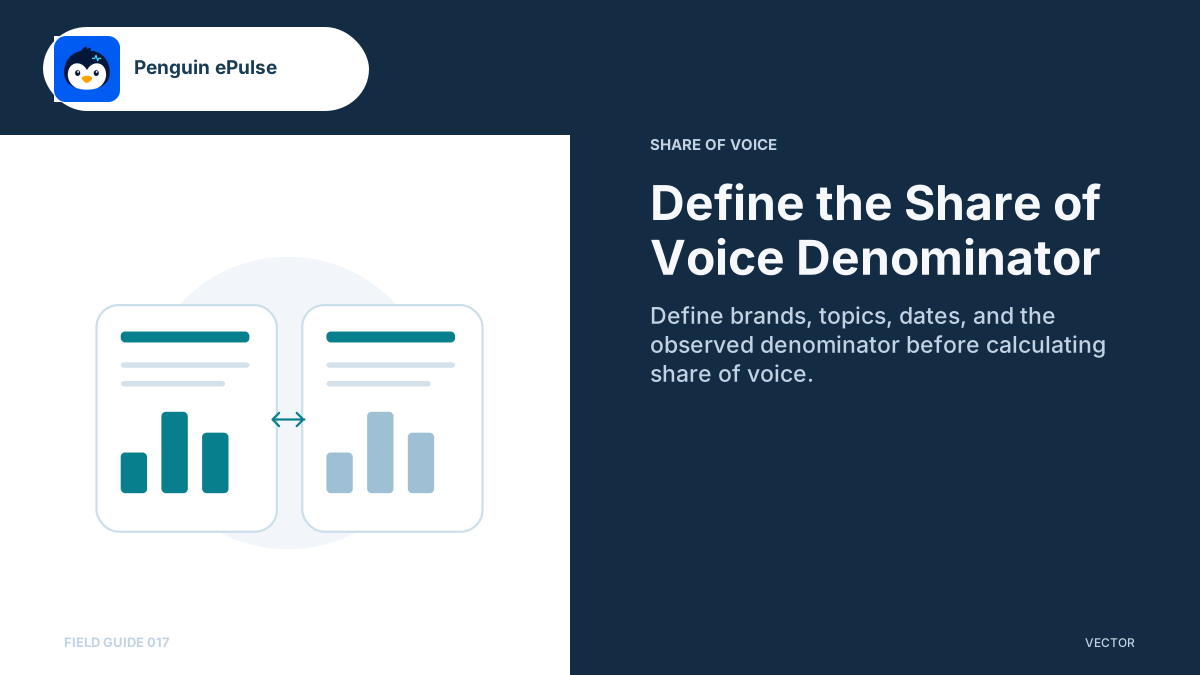
Share of Voice: Define the Market Before Calculating the Number
Calculate share of voice with a fixed competitor set, relevant mention rules, source coverage, and clear treatment of repetition and missing data.
Use Social Listening to Evaluate a Campaign Beyond Engagement
Evaluate campaign conversation with validated campaign queries, comparison windows, message interpretation, source evidence, and a decision-focused readout.
Turn Social Customer Feedback Into a Useful Theme Analysis
Analyze social customer feedback with a clear unit of analysis, a tested theme codebook, overlapping categories, evidence examples, and owned follow-up actions.
Write a Source-Linked Social Listening Research Brief
Write a social listening brief that separates findings, interpretation, evidence, alternatives, limits, and the next decision with an accountable owner.