
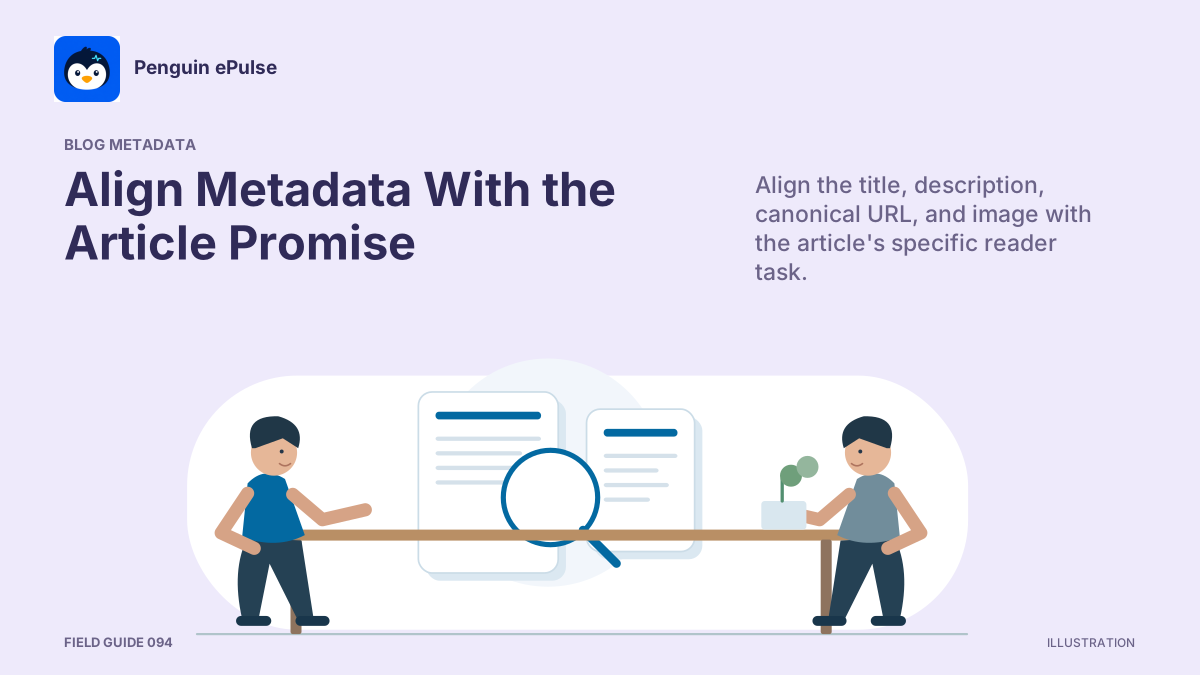
Treat metadata as an editorial promise
Blog metadata helps describe a page before someone reads it. The title identifies the subject and angle. The description summarizes the value. A canonical reference identifies the preferred URL. Share metadata provides a title, description and image for compatible sharing surfaces. These fields work together, but they do not override the article itself or control every search presentation.
Metadata for a social media marketing article should describe its specific decision or method, so broad category language does not erase the page's purpose.
Begin with the finished article rather than a keyword list. Ask what the page actually helps the reader do, what makes its approach distinct and what it deliberately does not cover. A metadata promise that exceeds the body creates disappointment even if it earns a click. The page should deliver the method advertised by its title without requiring the reader to request a demo for the missing answer.
Write a precise title
A title needs a clear subject and a useful angle. "Social reporting checklist: verify period, metrics and next actions" describes a more specific resource than "The ultimate reporting guide." Use superlatives only when the article can support them. Avoid adding "best," "complete" or "definitive" automatically to every page in the library.
A supplied title is an editorial signal rather than a fixed search display. Google: Title links [1] explains that Google determines title links from several sources. Keep the title and visible heading consistent with the page instead of promising an exact result appearance.
Keep the HTML title and visible main heading aligned in meaning. They do not need to match word for word when the title also contains the brand name, but they should not suggest different topics. Check titles together in a content inventory. Two articles with nearly identical promises probably need a clearer division of intent before their metadata is rewritten.
Make the description useful
Write a concise description that states the task, method or deliverable the reader will find. For an inbox routing article, mention owners, exceptions and escalation. For a formula article, mention the denominator and interpretation. Avoid descriptions assembled from a string of unrelated keywords. The result should read as a sentence someone would use to recommend the page to a colleague.
A description should summarize the actual value of the article. Google: Search snippets [2] explains that Google may use the meta description or page text for a snippet. A list of target keywords does not replace an accurate summary.
Do not promise that a supplied description will always appear in Google. The search engine may use page text that better matches a query. That makes the opening paragraphs and section explanations part of the broader presentation work. A good description remains worthwhile even when it is not selected, because it clarifies the article's editorial purpose.
Worked example: metadata for an approval guide
This is a hypothetical editing example. A draft is titled "The best social media management solution for every business," but the body explains how client approval should attach to an asset version. The title attracts an evaluation question the article does not answer. Adding a dozen software names to the description would widen the mismatch rather than fix it.
A better title is "Client social approvals: record the decision against the correct version." A suitable description is "Build a client approval process with version references, authorized reviewers, change rules and a release check before publication." The visible article then demonstrates a version change, shows a review checklist and explains exceptions. The metadata and the body now describe the same work.
The share image could show a simple diagram with Draft A, Approved A and Revised B. It should not show a fabricated customer outcome or a fake software certification. The image alt text can explain the version relationship. The image filename and URL should remain stable when the article is refreshed, unless a replacement artifact has a different purpose.
Maintain URL and image consistency
Use the same preferred article URL in internal links, sitemap entries and canonical references. When a page moves, plan the redirect and update links that you control. A canonical reference is not a replacement for deciding which public page should exist. Do not point unrelated articles to one broad hub merely because they belong to the same subject cluster.
Check which URL should represent any duplicate article copies. Google: Canonical URLs [3] describes canonicalization signals. Make those signals consistent; declaring a canonical URL is not a way to turn several overlapping articles into distinct resources.
Verify that share images resolve successfully and look readable at small sizes. A long article title may need a shorter image label. Keep the label accurate. Test crop behavior so the important words and logo remain visible. Provide real width and height information where the website implementation uses it to reserve space and avoid awkward layout shifts.
Review metadata as a set
- Title: does it identify the exact subject and angle without unsupported ranking or performance claims?
- Description: does it tell the reader what useful work the page will help them accomplish?
- Main heading: does it agree with the title's promise?
- Canonical URL: does it reference the intended live article, using the correct domain and path?
- Share image: is it relevant, accessible and legible in a cropped preview?
- Article information: do publication, update and author details reflect what actually occurred?
Run these checks after a meaningful content revision. A writer may narrow the article during editing while leaving the original broad title in the page head. A developer may change a slug while leaving an old canonical URL. An image may be replaced without updating the share reference. These are small implementation changes with a direct effect on the page's consistency.
Diagnose results without chasing every variation
If the search presentation differs from your supplied metadata, compare the query with the page's text and promise. The system may be choosing a different passage for a different intent. Review the article for clarity before repeatedly changing a description to force one appearance. Record changes so you can distinguish a metadata revision from a major body rewrite.
Metadata alone cannot create authority, establish product coverage or guarantee visibility. A polished title for a thin article remains a polished title for a thin article. Use search performance observations to prioritize investigation, then review the actual content and technical access. The aim is an accurate entry point to a useful page.
Frequently asked questions
Should every title contain the same product name?
A consistent brand suffix can help identify the publisher, but the descriptive part should distinguish the article. Do not let the suffix consume so much space that the page's subject becomes unclear.
Is a meta description a guaranteed search snippet?
No. Google can select a different passage from the page. Write the description carefully while ensuring the visible text also describes the topic clearly.
Should the canonical point to the topic hub?
An original article normally needs a canonical reference that represents that article. A hub and a detailed article serve different purposes, so they should not be treated as duplicate URLs merely because they are related.
Do meta keywords improve Google rankings?
No. Google: Supported meta tags and attributes [4] says Google does not use the meta-keyword tag for indexing or ranking. Use reader-facing topic tags for navigation, and put relevant terms naturally in useful content and accurate metadata.
References and source scope
- Google: Title links
Google automatically determines title links using multiple sources; supplied titles do not fix exact search appearance.
Source link checked 2026-10-03 - Google: Search snippets
Google snippets can be generated from page content or metadata; an answer paragraph and supplied description are not guaranteed displays.
Source link checked 2026-10-03 - Google: Canonical URLs
Google canonicalization signals for duplicate or similar URLs; does not make overlapping article intent distinct.
Source link checked 2026-10-03 - Google: Supported meta tags and attributes
Google explicitly states the meta-keyword tag is unused and has no effect on indexing or ranking; distinguishes metadata from visible content and reader-facing tags.
Source link checked 2026-10-03