
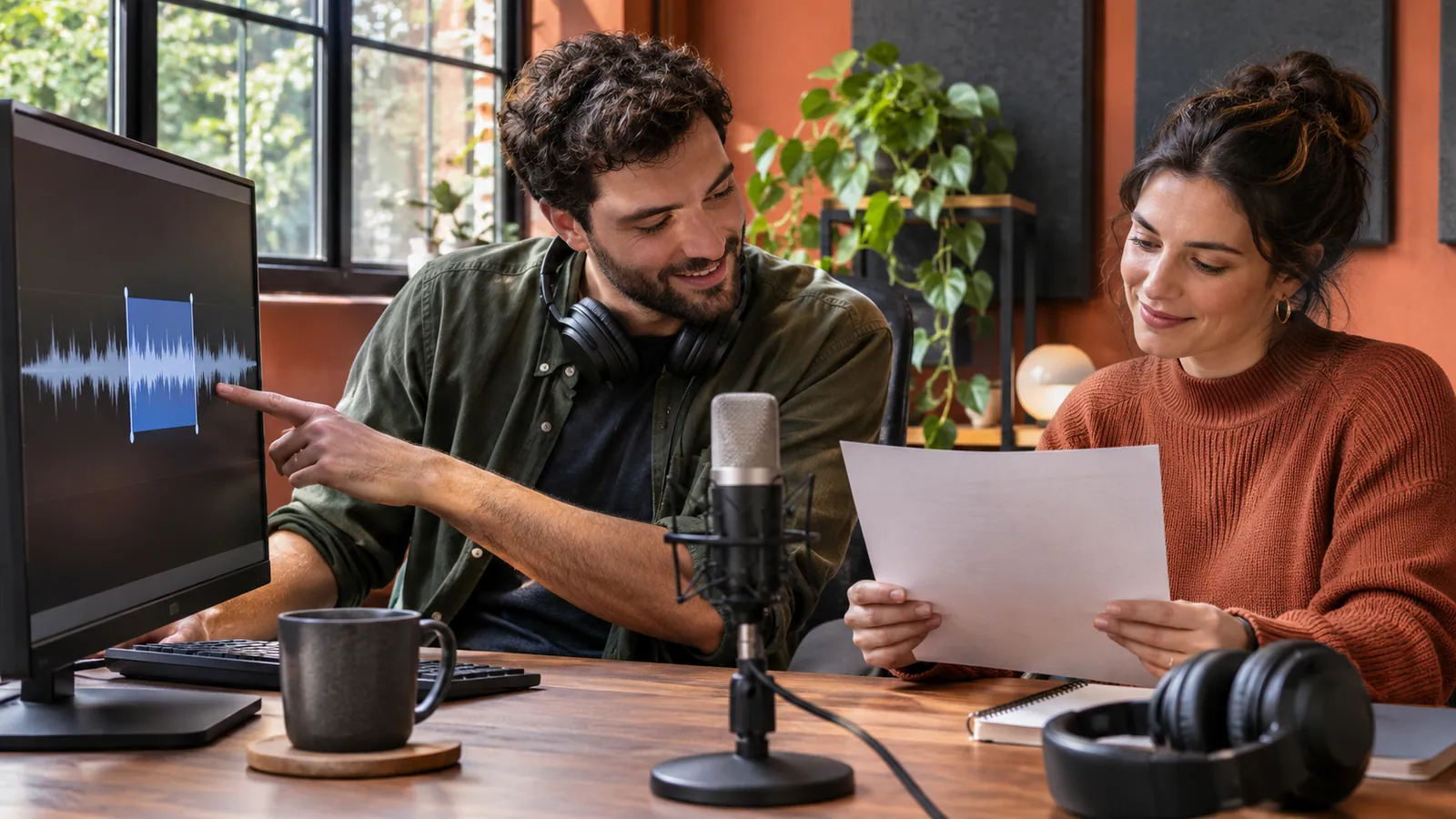
Podcast promotion starts with the useful answer inside the final episode. Share an accurate excerpt with context, choose channels for the intended audience and measure qualified listening separately from social reactions.
Start with the episode's actual value
Before drafting social copy, listen to the final cut and identify one useful claim, tension or practical answer. The promotional line should describe what a new listener will hear, not merely announce that an episode exists. A post about an IT integration might explain the decision a team will be able to make after listening. If the episode wanders, improve the edit before building a campaign around it. Use the show notes to give readers a route to the source and transcript.
Choose an excerpt that does not distort
A dramatic sentence may make a lively clip but misrepresent an expert's careful answer. Select a passage with enough context to stand alone, retain caveats that materially affect meaning, and confirm clip rights with guests. Caption the video or supply a written summary for silent viewing. Name the speaker and episode. If the excerpt contains a customer story or paid endorsement, verify permission and disclosures; the FTC's endorsement resources describe how material relationships can matter in advertising.
Use a trailer as a promise, not filler
Spotify documents a trailer option that appears at the top of a show page for an eligible show. A useful trailer answers who the show is for, what kind of questions it tackles and what the host brings to them. It should sound like the real show. Avoid promising guests, frequency or outcomes not yet confirmed. Revisit the trailer if the show's editorial direction changes.
Match the channel to the listener
A specialist B2B show may need a founder's direct explanation and a source-linked post on a professional network. A practical consumer-service episode may travel better through a website FAQ or account response. Do not cross-post the same caption everywhere. Use a channel-native framing that brings the listener's problem forward. Apple's show-presentation guidance emphasizes vocabulary and identity that fit the host and content; the same principle should guide promotion.
Separate exposure from listening
Track the channel, link, period and episode. Social impressions indicate that a post was displayed under that platform's definition; they are not podcast plays. Podcast dashboard plays or audience metrics do not automatically prove a business outcome. Test one element at a time: opener, clip length, source page or guest framing. Review comments for genuine questions and include those in future episode planning.
Do not confuse a campaign calendar with distribution
Penguin ePulse Podcast Studio can help prepare an episode in Editorial Desk, and the content planning workflow can help organize posts for supported connected channels. Neither step makes a podcast available in listening directories or creates an audience. Before promoting, open the public episode link, confirm playback and check the show notes. Afterward, read social reactions and host listening metrics as different signals.
Run a small channel experiment
Choose one audience and two suitable distribution surfaces instead of pasting the same announcement everywhere. A guest's professional network might respond to an evidence-led quote; a service audience might need a short FAQ clip. Keep the episode promise consistent, but rewrite the opening for the context of each channel. Use a distinct tagged link where the destination permits it and record the publication time, creative, audience and result. Review actual listening or qualified actions, not only reactions to the teaser.
Promise check
A teaser should make a fair promise that the episode itself keeps.
Make the episode useful even without a click
A promotional post can provide one complete insight and invite deeper listening for the method or examples. This is fairer to the reader and may earn more trust than withholding the answer. Ask the guest to share only when the excerpt accurately reflects their view; do not treat their network as a distribution obligation. Revisit the post after release for questions that deserve a written answer or a follow-up episode. When promotion is complete, archive the strongest questions as editorial input rather than repeating the same teaser indefinitely.
Example: promote a technical conversation
Suppose an episode explains why a social listening trend changed after a source was added. A short social post can show the decision: “Before you call this a market shift, check whether the source mix changed.” A second asset can be a labeled chart of the hypothetical pattern, with the method in the caption. A third can point to the full conversation for the expert's reasoning. None should imply measured customer impact. Send each asset to a channel where analysts or marketing operators actually discuss this problem, then inspect whether the click led to the relevant episode page.
Plan the month after release
The launch post is only the first useful opportunity. A week later, answer an audience question from the episode in writing. Later, share a source update or a guest clarification. If no new information exists, do not recycle the same announcement. Keep a simple log of the original episode, derivative asset, rights approval, destination and audience response. This helps a team learn which framing served the listener. It also prevents a promotion calendar from turning into a stream of repetitive links.
Write the campaign from a listener objection
Ask why a relevant person might skip the episode. Perhaps they think the topic is familiar, the guest is unknown or the length looks high. Address one objection honestly in the promotional asset. Show a surprising decision from the conversation or a short worked example, then say where the episode provides the full reasoning. Do not claim the conversation settles a question it only introduces. A guest may prefer a quote with context over a dramatic clipped sentence; ask them to review any excerpt that uses their identity or perspective.
Plan different assets for discovery and follow-up. A first post can state the practical question; a later note can answer a reader's objection using the source linked in the show notes. A transcript excerpt may serve someone who cannot listen immediately. Each asset should have a distinct reason to exist.
Look for qualified response
Social impressions tell you whether a post was displayed, not whether someone listened. A click to a landing page tells you the episode attracted interest, but not whether the person heard the answer. A host's listening report gives another piece of the picture. Keep these measures separate and review questions, replies or referrals that show the topic reached the intended audience. If promotion produces traffic but no useful questions, examine whether the promise and episode matched. If a small niche post sparks a thoughtful discussion, preserve that insight for the next episode even when its raw reach is modest.
When a clip outperforms the episode
A clip can answer a question so well that viewers do not need the full conversation. That is not automatically a failure. Compare the clip’s message with the episode promise and ask whether the long version offers a genuine additional method or merely repeats the teaser. If the episode includes a worked example, point to that difference. If it does not, improve the editorial format before spending more effort on distribution. Keep the result as a learning about audience need, not a reason to inflate a listen count.
More questions
What is the best way to promote a new podcast?
Lead with a clear listener problem, choose one or two relevant channels, use an accurate excerpt and measure actual listening separately from post impressions.
Does a trailer replace an episode?
No. It explains the show and may help a visitor decide to listen. The episodes must deliver the promised value.
Can one clip be posted everywhere?
Technically a file may travel, but framing, rights, format and accessibility should be checked for each destination.
How often should I promote a podcast episode?
Use distinct, useful reasons to revisit it: the launch question, a source-backed excerpt and a later audience question. Repeating the same announcement adds little; review listener response before making more assets.
Put the guide to work.
Episode promotion test card
Download the editable worksheet. It includes two illustrative examples and blank planning rows. Replace the examples with your own verified information.
Download the worksheet (CSV)References and source scope
- Uploading a trailer
Trailer type, placement and publishing choices.
Spotify · Checked 2026-11-03 · Public source material. - Present your podcast
Show identity and episode presentation guidance.
Apple Podcasts for Creators · Checked 2026-11-03 · Public source material. - Advertisement Endorsements
Endorsements and material relationship guidance for advertising.
Federal Trade Commission · Checked 2026-11-03 · Public source material.