Define one decision
Write the market question and the timeframe the client cares about.
 Penguin ePulse
Build an inspectable market brief from public sources in Penguin ePulse Data Intelligence while keeping client scope and access clear.
See this workflow in a demo
Start with the client decision, show each source and limitation, and separate observed market signals from the agency recommendation.
An agency is asked for a competitive response by Friday. Several charts and screenshots circulate without dates or source context. The client needs to understand what changed, where the evidence came from and what remains uncertain.
Use Data Intelligence as a source-linked research workspace. Define the client scope, inspect original sources and explain what available data can and cannot support. Access and source coverage must be checked per workspace.
Use this view to frame a real evaluation with your team. The industry scenario is illustrative; the screenshot shows Demo Brand example data.
Explore Data Intelligence →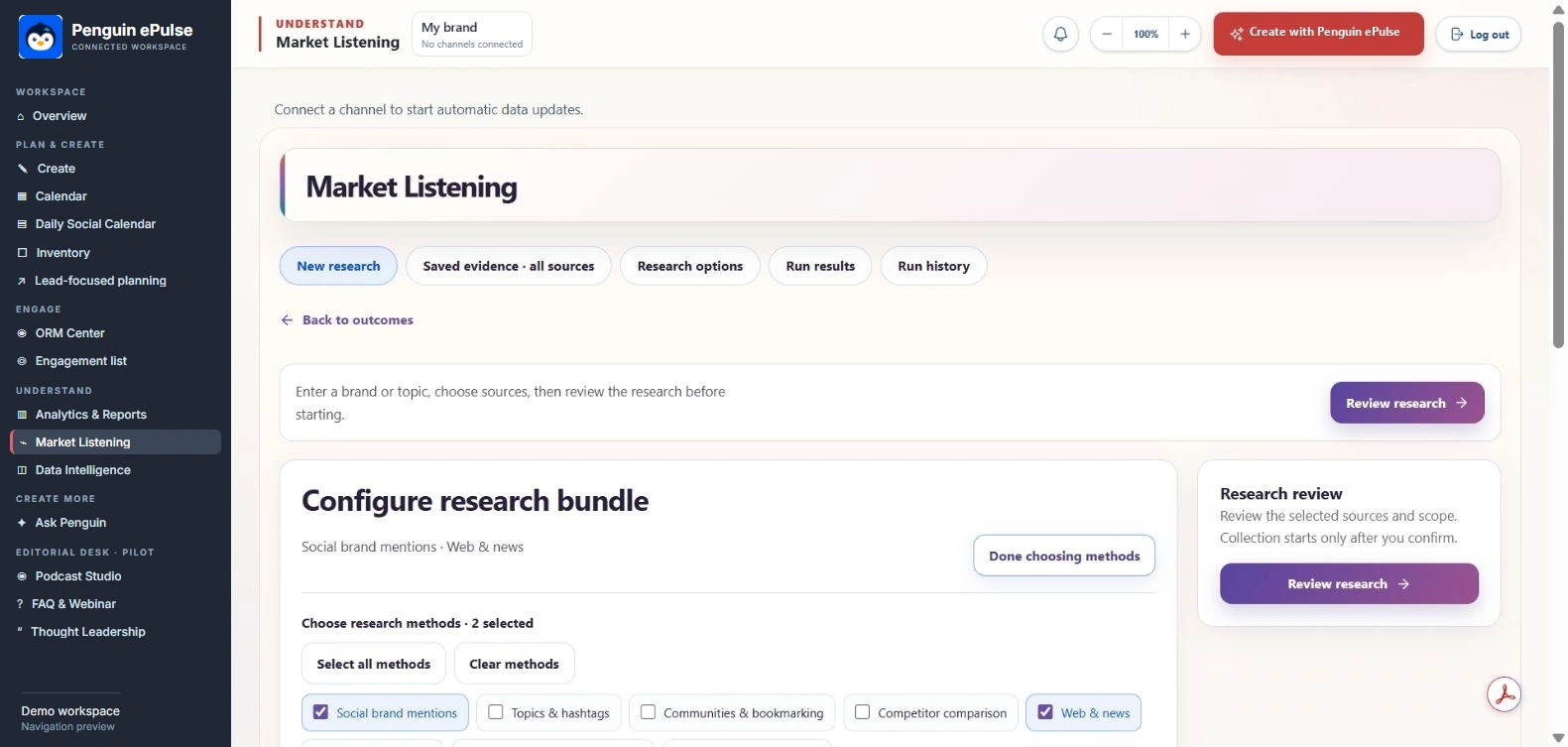
Write the market question and the timeframe the client cares about.
Collect relevant public sources with dates, geography and links.
Mark what is directly observed, what is inferred and what needs more research.
Recommend a proportionate action with an owner and a way to learn whether it worked.
Audit source completeness and whether the client can trace a claim without asking the analyst. Do not sell a source count as strategic certainty.
Related guidance: Google guidance on helpful, people-first content. Check the current source and your own review requirements before publication.
See the relevant Penguin ePulse feature, or bring this workflow to a demo.
No. Coverage depends on available sources and access.
No. Inferences should be labeled and linked to their evidence.