State the decision
Write the precise question the brief must answer and the markets it covers.
 Penguin ePulse
Use Penguin ePulse Data Intelligence to organize public market signals, source links and review questions for a pharma communications brief.
See this workflow in a demo
Separate public market signals from validated evidence, keep a link to every source, and send claims for medical and legal review before using them in a pharma brief.
A team is preparing an education plan and receives a market trend claim from several social posts. The claim sounds persuasive but its origin, geography and date are unclear. A source-linked brief makes the evidence inspectable before the claim enters content planning.
Use Data Intelligence to collect accessible public sources and compare them by date, market and relevance. Coverage depends on the available sources and provider access. The workspace is not a clinical evidence system or pharmacovigilance intake.
Use this view to frame a real evaluation with your team. The industry scenario is illustrative; the screenshot shows Demo Brand example data.
Explore Data Intelligence →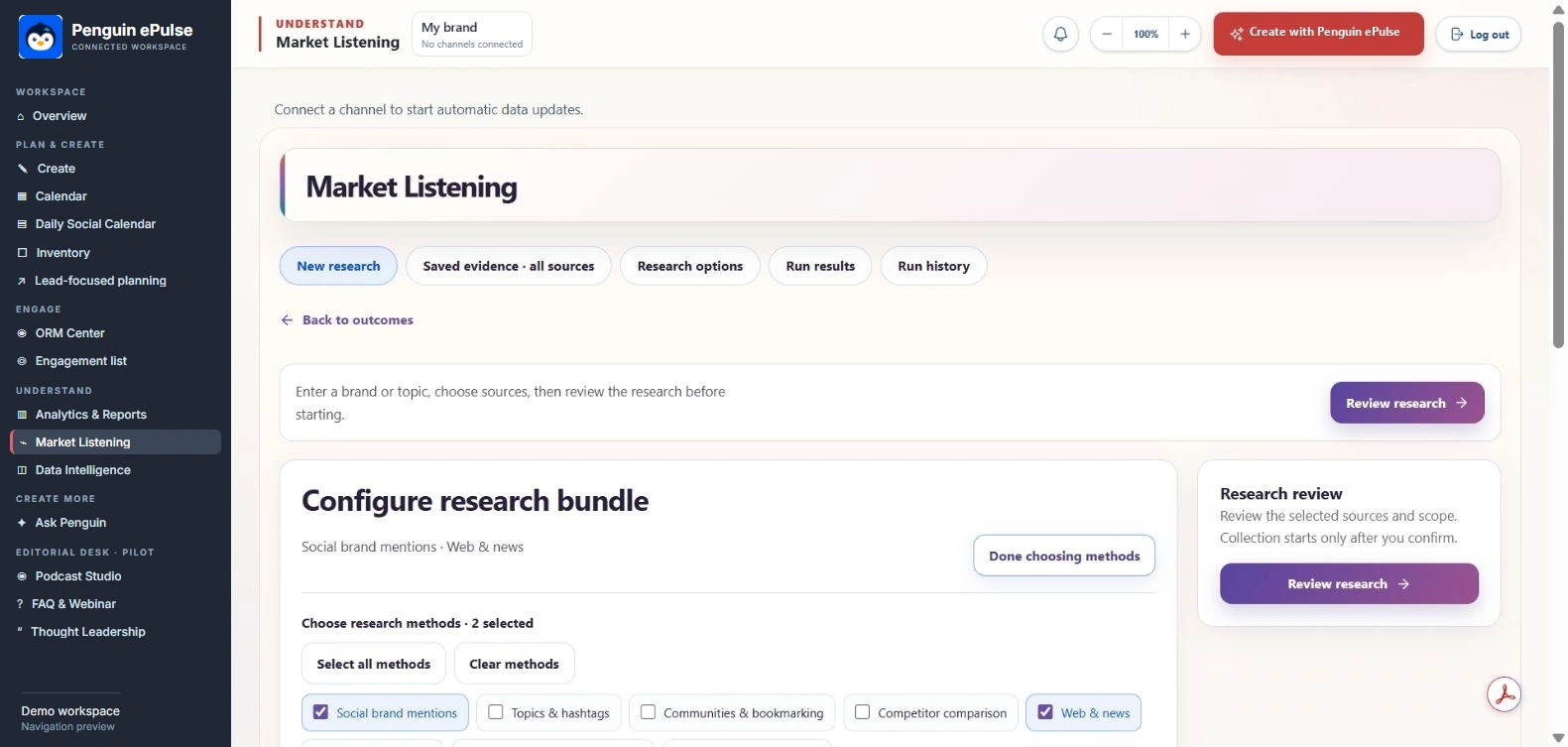
Write the precise question the brief must answer and the markets it covers.
Record source, publication date, context and whether a claim is original reporting or a repost.
Keep public conversation themes apart from formal research, regulatory guidance and approved company data.
Ask medical, legal and regional owners to validate any claim before it informs outward communication.
Count sourced claims, unresolved gaps and decisions revised after review. Never treat online volume as proof of clinical prevalence or efficacy.
Related guidance: FDA prescription drug advertising guidance. Check the current source and your own review requirements before publication.
See the relevant Penguin ePulse feature, or bring this workflow to a demo.
No. It helps organize sources and questions; qualified reviewers validate clinical and promotional claims.
No. Source coverage depends on access, provider limits and the available public material.